
Types of Dental Implants: Which Kind Is Right for You?
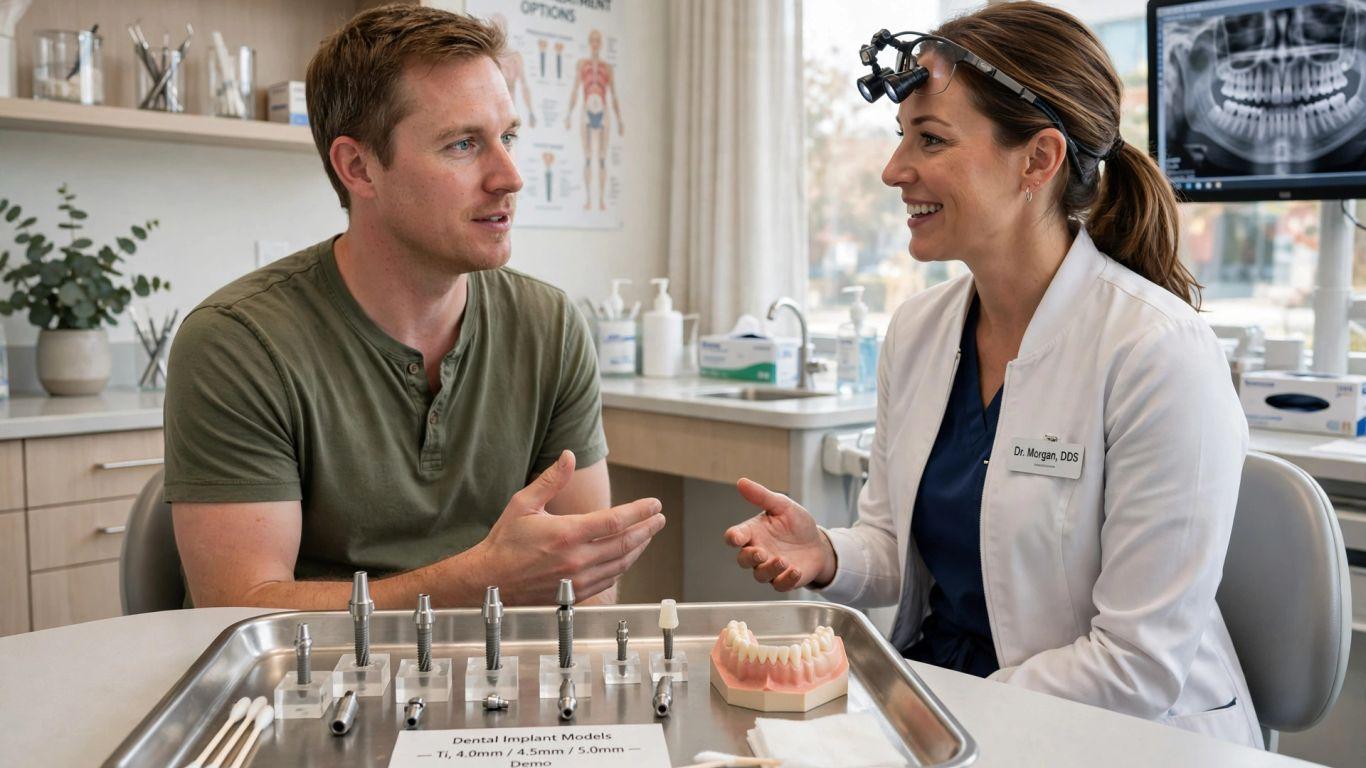
Dental implants are devices placed in or around the jaw to support replacement teeth. They can be used for one missing tooth, several teeth, or a full arch, but the implant itself is only one part of the restoration. The type and arrangement depend on your mouth, health, and treatment goals.
What dental implants are and how they work
The implant post, abutment, and replacement tooth
A typical implant restoration has three parts. The implant post sits in the jaw and serves as an artificial tooth root; an abutment connects the post to the replacement tooth, such as a crown. Together, these pieces create a stable foundation for chewing, though the exact design can vary by treatment plan.
How an implant bonds with the jawbone
After placement, bone can grow around the implant surface and hold it in place. This process, called osseointegration, takes time and is one reason the final tooth may not be attached immediately. Healing varies from person to person.
How implants differ from bridges and dentures
A bridge connects a replacement tooth to neighboring teeth, and a denture is removable, while an implant is placed in the jaw and can support a crown, bridge, or denture. See how dental implants compare to dental bridges.
Main types of dental implants
The phrase “types of dental implants” can refer to where an implant is placed, its size, or how it supports replacement teeth. Our dental implants page gives an overview of the options we offer in Spokane.
Endosteal implants placed in the jawbone
Endosteal implants are placed within the jawbone and are a common option when the bone can support them. They are often shaped like small screws or cylinders and can support a crown, bridge, or denture.
| Implant description | Where it is placed | General consideration |
|---|---|---|
| Endosteal | Within the jawbone | Commonly considered when jawbone can support placement |
| Subperiosteal | On the jawbone, beneath the gum tissue | May be considered in selected cases with limited bone support |
| Zygomatic | Anchored in the cheekbone | A specialized option for certain upper-jaw situations |
| Mini implant | Within the jawbone, with a narrower diameter | May be considered for particular restorative needs |
These labels are a starting point, not a way to choose an implant without an examination.
Subperiosteal implants positioned on the jawbone
A subperiosteal implant rests on the jawbone beneath the gum tissue. It may be considered in selected situations where the jawbone does not provide enough support for a conventional implant.
Zygomatic implants anchored in the cheekbone
Zygomatic implants are specialized implants that may be considered for some people with significant bone loss in the upper jaw. Their placement requires careful planning and experience.
Mini dental implants and when they may be considered
Mini dental implants have a narrower diameter than standard implants and may be considered to help stabilize a removable denture or address a particular restorative need. Smaller size does not mean they are automatically a simpler or better choice.
Ways implants can replace missing teeth
A single implant may hold one crown, multiple implants can support a bridge, and a series of implants can support a full-arch restoration. The number of implants is not always the same as the number of missing teeth.
A single implant with a crown
When one tooth is missing, an implant may support an individual crown. The crown is planned to fit the bite and look at home among the neighboring teeth.
Implant-supported bridges for several missing teeth
An implant-supported bridge can replace several adjacent teeth without requiring an implant for every missing tooth. This differs from a traditional dental bridge, which relies on neighboring natural teeth for support.
Full-arch options, including fixed and removable teeth
When many or all teeth in an arch need replacement, implants may support either a fixed restoration or a removable denture. Read about full-arch dental implants for more detail.
Why All-on-4 describes a treatment approach, not an implant type
All-on-4 refers to a treatment approach in which a full-arch restoration is supported by four implants. It does not name a material or a separate category of implant. Learn more about All-on-4.
Implant materials and design choices
Titanium and zirconia are two materials used for implant components, while one-piece and two-piece describe how the implant and connecting parts may be designed.
Titanium implants and their track record
Titanium is widely used for dental implants and has a long history of use in implant dentistry. A separate abutment connects the post to the restoration in many designs.
Zirconia implants as a metal-free option
Zirconia is a ceramic material used in some implant systems and may appeal to people seeking a metal-free option. Ask what components would be made from zirconia and whether the design fits your case.
One-piece and two-piece implant designs
In a one-piece design, the implant and the connecting portion are joined as one unit. In a two-piece design, the post and abutment are separate components.
How material and design affect treatment planning
Material and construction choices are considered alongside the location of the missing tooth, bone, and desired restoration. Ask about the reason for a proposed choice rather than comparing labels in isolation.
Factors that help determine which implant may suit you
There is no single implant type that fits every patient. The decision draws on clinical findings, the number and location of missing teeth, health and healing considerations, and what kind of replacement tooth you want.
Jawbone volume and the possible need for grafting
An implant needs appropriate support at its planned location. If there is not enough bone, a provider may discuss bone grafting or another approach after examination and imaging.
Gum health, overall health, and healing considerations
Healthy gums and overall health are part of treatment planning. Be candid about health conditions and tobacco use. Useful topics to cover:
- Current gum or dental problems that may need attention first
- Health conditions or medications that could affect treatment planning
- Tobacco use and questions about healing
- Any past experience with anesthesia or oral surgery
Number and location of missing teeth
One missing front tooth presents different restorative questions from several missing back teeth or a full arch. A tooth-by-tooth review can help clarify the choices.
Budget, treatment time, and personal preferences
Cost and duration vary with the plan and whether preparatory care is needed. Ask for a written outline of steps and costs; see our financial information.
What to expect from implant treatment
Implant treatment is usually a sequence rather than a single appointment, beginning with evaluation and planning, followed by placement and a healing period before the final restoration.
Consultation, imaging, and a personalized plan
At the consultation, the dental team reviews your history, examines your mouth, and may use imaging to plan implant position. Use this visit to ask about risks, recovery, and costs.
Implant placement and possible preparatory procedures
Implant placement is a surgical procedure. Some people may need preparatory care, such as gum treatment or a bone graft. Follow the instructions you receive about food, medicines, and aftercare.
Healing time before the final restoration
The implant site needs time to heal before the final restoration is attached. Avoid comparing your timeline too closely with someone else’s.
Caring for implants and keeping follow-up appointments
Daily cleaning and regular dental visits remain important. Contact your provider if you notice a change rather than waiting for a routine visit.
Conclusion
Choosing among the types of dental implants starts with understanding what each design is meant to do, then matching those options to your anatomy, health, and goals. The American Dental Association’s MouthHealthy implants guide offers additional background. To discuss your case, contact our Spokane office.
Frequently Asked Questions
What is the most common type of dental implant?
Endosteal implants, which are placed in the jawbone, are commonly used when the bone and other clinical factors support that approach. A dental evaluation is needed to determine whether one is suitable for you.
Are dental implants the same as replacement teeth?
No. The implant is placed in or around the jaw and supports a replacement such as a crown, bridge, or denture. The visible replacement tooth is a separate part of the restoration.
How do I know which type of dental implant I need?
A dental professional assesses your oral health, jawbone, missing teeth, and goals before recommending an approach. The terminology alone cannot determine which option is appropriate.
Can I get an implant if I have bone loss?
Bone loss does not automatically rule out implant treatment, but it can affect the options. A provider may discuss grafting or another approach after examining the site and reviewing imaging.
What is the difference between a fixed and removable implant-supported restoration?
A fixed restoration stays in place during everyday use and is typically removed by a dental professional when needed. A removable restoration can be taken out by the wearer for cleaning.
Are mini dental implants suitable for everyone?
No. Mini implants have a narrower diameter and may be considered for particular restorative needs, but suitability depends on the intended use, bone, and overall treatment plan.
How long does dental implant treatment take?
The timeline varies with the treatment plan, healing, and whether preparatory procedures are needed. Your provider can give an estimate based on your examination and explain what could affect it.
About the Author
This article was prepared for Pacific Northwest Prosthodontics, 826 North Mullan Road #D, Spokane Valley, WA 99206, and reflects the experience of Dr. Michael Brooks, DMD, MS (DMD, Tufts University School of Dental Medicine; four-year residency in prosthodontics and maxillofacial prosthetics and Master’s degree at the Mayo Clinic; U.S. Air Force prosthodontist; member of the American College of Prosthodontists and fellow of the American Academy of Maxillofacial Prosthetics) and Dr. Michael Johnson, DDS, MS (dental school plus three additional years at the Mayo Clinic and more than 20 years of private practice).
Disclaimer
This content is for general educational purposes only and is not a substitute for professional dental advice, diagnosis, or treatment. Consult a qualified dental professional about your specific situation.
Blog Post Author

Contributed by DentalROI
DentalROI provides relevant dental content to help providers educate patients. The statements, services, and products referenced in this article have not been evaluated by the Food and Drug Administration, and they are not intended as a substitute for professional medical advice, diagnosis, or treatment. Always seek the advice of your dental provider with any questions or issues you may have. Specific recommendations may vary in different circumstances, so individual consultation is important.
