
Dental Implants vs. Dentures: Which Is Better for Missing Teeth?
How Dental Implants and Dentures Replace Missing Teeth
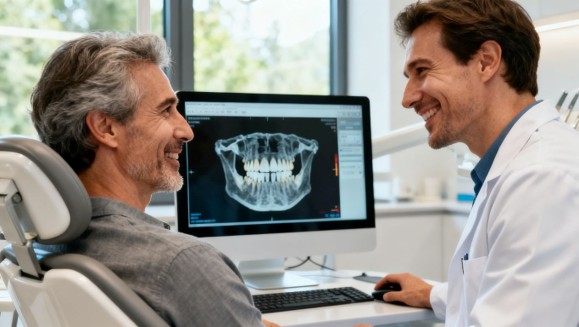
When a tooth is lost, the goal is more than filling an empty space. Replacement teeth should help restore chewing, speech, facial support, and confidence while fitting the condition of your mouth. The main difference in dental implants vs dentures is how each option is held in place and how it interacts with the jaw, which your prosthodontist can evaluate during a consultation.
What Dental Implants Are and How They Work
A dental implant is a small post placed into the jawbone to replace the root of a missing tooth. After healing, the post can support a crown, bridge, or replacement teeth. Because the restoration is anchored rather than simply resting on the gums, implants can feel more like natural teeth during everyday activities. Learn more on our dental implants page.
Implants usually involve several stages, including evaluation, placement, healing, and attachment of the final restoration. The exact plan depends on how many teeth are missing, the health of the surrounding tissues, and the amount of available bone.
What Dentures Are and How They Stay in Place
Dentures are removable appliances that replace missing teeth and some of the surrounding gum tissue. A complete denture rests on the gums and is shaped to fit the contours of the mouth, while denture adhesives may provide additional grip for some people. Our dentures page covers the range of options we offer.
A new denture can feel unfamiliar at first, especially while the mouth adjusts to its size and movement. Fit can change over time as the gums and jawbone change, so periodic adjustments or relining may be needed.
Full Dentures vs. Partial Dentures
Full dentures replace all the teeth in the upper arch, lower arch, or both. Partial dentures replace several missing teeth while using the remaining natural teeth for support, often with clasps or other attachments. The choice depends on which teeth remain, their health, and the overall design of the bite.
Partial dentures can preserve a more natural appearance when they are carefully designed, but they still require daily cleaning and regular dental reviews. Full dentures may be more suitable when most or all teeth in an arch are missing or cannot be restored.
Implant-Supported Dentures and Overdentures
Implant-supported dentures combine removable replacement teeth with implants that improve retention. The denture may attach to the implants through specialized connectors, reducing movement compared with a conventional denture.
This middle-ground approach, including our All-on-4 implant-supported dentures, can be useful for someone who wants more stability than a traditional denture provides but does not need or want an individual implant for every missing tooth.
Comparing Comfort, Appearance, and Everyday Function
Comfort is personal, and neither option feels exactly the same for everyone. Some people value the fixed sensation of implants, while others prefer a removable appliance that avoids surgery. Implants often feel more natural because they are secured in the jaw and do not cover as much of the palate or gum tissue as some dentures. A well-made denture can also become comfortable, but it may always feel more noticeable, particularly when speaking or eating certain foods.
Both implants and dentures can improve eating and speaking compared with having untreated missing teeth. Implants generally provide firm support for biting, while dentures may require a slower transition to harder, stickier, or tougher foods. A fixed implant restoration is less likely to move during chewing or conversation, while conventional dentures can slip, particularly on the lower jaw, and adhesives may help but do not replace a proper fit.
How Each Choice Affects Your Smile's Appearance
Modern dentures can be designed to match the shape, color, and proportions of the face. Implant restorations can also look highly natural, particularly when the crown or bridge is designed to blend with neighboring teeth. The best result comes from a plan that considers the gums, lip support, tooth display, and facial movement rather than focusing on the teeth alone.
Dental Implants vs. Dentures: Cost and Long-Term Value
Price is often the first practical concern when comparing these treatments. Dentures usually have a lower upfront cost than a full implant treatment. Implant pricing can include imaging, extractions, bone grafting, implant placement, abutments, crowns, temporary teeth, and several visits.
Ask for a written estimate that separates treatment stages and identifies what happens if the plan changes; our financial information page covers payment options.
Dental insurance may cover part of a denture, extraction, crown, or other component, but coverage for implants varies by plan and reason for treatment. Dentures need daily cleaning and may require adjustments, relining, repairs, or eventual replacement as the mouth changes.
Implants require regular brushing, professional examinations, and care of the surrounding gums and restoration. A less expensive initial option may involve more adjustments or replacements over many years, so long-term value depends on fit, expected lifespan, future care, and what you can realistically afford.
What the Treatment Process Involves
The process differs substantially between implants and dentures. Dentures can often be made relatively quickly, while implants require surgery and a healing period before the final restoration is attached. Treatment for implants typically begins with an examination, medical history, dental imaging, and a discussion of the final restoration, followed by placement, healing, and attachment of the abutment and crown, bridge, or denture.
Traditional dentures are made after the gums have healed from extractions, while immediate dentures are prepared before extraction and inserted the same day. Bone grafting may be recommended when the jaw does not have enough volume or shape to support an implant in the planned position; our bone grafting page explains this process further. Not everyone with bone loss is automatically excluded from implants, since imaging and a clinical examination determine whether grafting, a different implant position, or dentures would be more appropriate.
Recovery Time, Temporary Teeth, and Follow-Up Visits
Recovery depends on the number of procedures, the person's health, and the type of restoration. Swelling and tenderness are common after oral surgery, while denture wearers may experience sore areas during the first adjustment period. Temporary teeth can help with appearance and basic function while the mouth heals. Follow-up visits allow the dentist to check healing, adjust pressure points, evaluate the bite, and confirm that cleaning is effective.
Who Is a Good Candidate for Each Option
There is no universal winner in the dental implants vs dentures decision. Implants may suit someone who wants a fixed restoration, has adequate bone or is willing to consider grafting, and can maintain careful oral hygiene. Smoking, uncontrolled medical conditions, active gum disease, or difficulty attending multiple appointments may change the risk assessment, though these issues do not always rule out implants.
Dentures may be practical when a person needs to replace many teeth without surgery, wants a shorter initial treatment timeline, or has a budget that does not support implants. They can also be appropriate when bone volume or medical considerations make implant surgery less suitable.
Healthy gums and adequate bone support are important for implant planning, while active infection or untreated gum disease can compromise results, so a full evaluation with our prosthodontic specialists is the best starting point.
How to Choose Between Dental Implants and Dentures
A good decision comes from matching treatment to real priorities rather than choosing based on a single advertised benefit. Ask for a clear explanation of alternatives, limitations, costs, and likely maintenance. Useful questions include how many teeth or arches need to be replaced, what alternatives are reasonable for your bone and gum health, what the complete estimated cost includes, and how long each stage will take.
Some patients use implants for selected support and a removable overdenture for the rest of the arch, balancing stability, appearance, surgical complexity, and cost. Persistent pain, swelling, bleeding gums, loose teeth, or an unexplained change in the bite should be addressed before final replacement is planned.
Conclusion
Dental implants and dentures can both restore missing teeth, but they do so in different ways. Implants offer fixed support for many patients, while dentures can provide a practical, removable, and often more affordable solution. The best choice depends on your mouth, health, priorities, timeline, and budget, so a detailed consultation is the sensible next step. Contact our Spokane office to get started.
Frequently Asked Questions
Are dental implants better than dentures?
Neither option is always better. Implants may offer greater stability and a more natural fixed feeling, while dentures may be more practical because they are removable, less invasive, or less expensive initially.
Can dentures look natural?
Yes. Modern dentures can be designed to match facial proportions, gum contours, and the desired tooth shape. Appearance also depends on fit, tooth arrangement, and the quality of the dental laboratory work.
Do dental implants hurt?
The placement procedure is performed with anesthesia, but soreness, swelling, or tenderness can occur afterward. Your dental team will explain expected recovery and how to manage discomfort.
How long do dentures last?
Dentures do not last forever. Wear, changes in the gums and jawbone, damage, and changes in fit may lead to adjustments, relining, repair, or replacement.
How long does implant treatment take?
The timeline varies according to extractions, bone grafting, healing, and the type of final restoration. Some cases take several months, while simpler cases may follow a shorter schedule.
Can I get implants if I have bone loss?
Possibly. Some people may be candidates after bone grafting or with a modified treatment plan, while others may be better served by dentures. According to the American Dental Association's MouthHealthy resource on dentures, imaging and a clinical evaluation are needed to determine the best option for replacing missing teeth.
What should I bring to a dental consultation?
Bring a list of medications, medical conditions, allergies, previous dental records if available, and questions about cost, timing, appearance, and maintenance. Be open about smoking and any healing concerns.
About the Author
Pacific Northwest Prosthodontics is located at 826 North Mullan Road #D, Spokane Valley, WA 99206. The practice is led by prosthodontic specialists Dr. Michael Brooks and Dr. Michael Johnson, who together have completed more All-on-4 implant-supported denture cases than any other prosthodontic practice in the state of Washington, providing dentures, crowns, bridges, implant restorations, and maxillofacial prosthetics to patients throughout Eastern Washington, Northern Idaho, and Northern Oregon.
Disclaimer
The information provided in this article is for educational purposes only and does not constitute professional dental advice, diagnosis, or treatment recommendations. Whether dental implants or dentures are right for you can only be determined through an in-person evaluation. Always consult your dentist with any questions regarding your treatment.
Blog Post Author

Contributed by DentalROI
DentalROI provides relevant dental content to help providers educate patients. The statements, services, and products referenced in this article have not been evaluated by the Food and Drug Administration, and they are not intended as a substitute for professional medical advice, diagnosis, or treatment. Always seek the advice of your dental provider with any questions or issues you may have. Specific recommendations may vary in different circumstances, so individual consultation is important.
